

While trade agreements open up cost-effective global supply chains, UK project managers and engineering leads face a practical challenge: ensuring offshore plant equipment, structural steel, pressure vessels, storage tanks, or process skids, meets strict domestic quality codes while clearing import duty thresholds.
The question on your desk is highly specific: does your custom-fabricated equipment qualify for duty-free access under CETA, and does the compliance pathway change depending on whether you're importing a steel frame, a pressure vessel, or a fully skidded process unit?
The India-UK Comprehensive Economic and Trade Agreement (CETA) came into force on 15 July 2026. For UK buyers it does one headline thing: it removes import duty on the large majority of goods moving from India. The UK scrapped tariffs on around 99% of Indian imports from day one. That makes custom-fabricated plant equipment from India, across structural, pressure, and mechanical categories, a serious, cost-competitive option in a way it wasn't a year ago.
Only if the engineering team and the fabricator design and build to UK/EU standards from day one, whichever category the equipment falls into. If they don't, that equipment won't just get hit with an import tariff at the border; it won't even be legally allowed onto a UK site.
At Acufore, we bridge the common disconnect between offshore drafting and shop-floor manufacturing through an integrated design-to-delivery model that guarantees compliance at every stage, across structural steel, pressure equipment, and process plant.
Drawing from a portfolio of 1,400+ completed industrial projects spanning storage systems, pressure vessels, and complex process plant layouts, here is a breakdown of the exact technical standards we clear to get your zero-duty plant equipment safely into the country, category by category.
On this page ▾
01Structural Steel: BS EN 1090 (Execution Class 2)
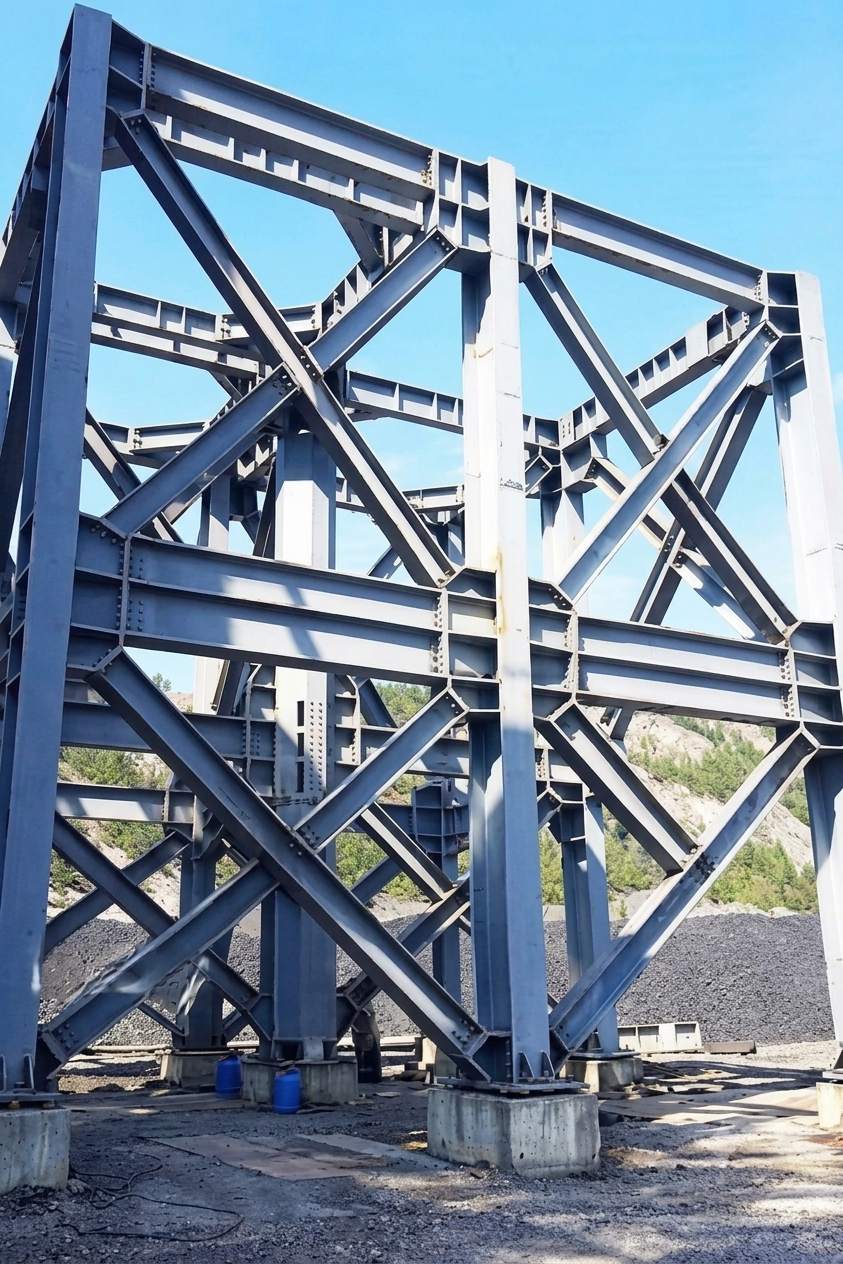
Where the equipment is a structural steel frame, platform, or pipe rack, it must comply with BS EN 1090 to be legally sold or erected in the UK. For almost all standard industrial projects, think access platforms, equipment skids, walkways, and pipe racks, you must meet Execution Class 2 (EXC2).
Raw Material Sourcing
Turnkey Fabrication
UK Border Clearance
UK Job Site Delivery
Under CETA, to qualify for preferential (duty-free) entry, the equipment must satisfy the agreement's Rules of Origin, broadly genuine transformation and qualifying value content, in India. Slicing up generic steel beams, or bolting together off-the-shelf vessel components, doesn't count. The raw material must be heavily engineered, fabricated, and welded into a custom, finished structure or vessel.
The Plain Business Consequence
If your offshore fabricator is not audited and certified to the relevant standard for the equipment category, they cannot legally apply a UKCA (or CE) mark to the finished item.
- If it has no UKCA mark: The equipment may not be accepted for installation until compliance requirements are satisfied, potentially leading to significant project delays and additional costs.
- If you use disconnected vendors: Hiring separate drafting and fabrication shops often leads to mismatched material calls or unverified welding standards. HMRC will reject the origin claim, withdraw preferential treatment, and demand retroactive customs duties.
02Material Traceability: The BS EN 10204 Type 3.1 Paper Trail
A major pitfall in offshore procurement, for steelwork and pressure equipment alike, is material substitution. To save costs, independent fabricators sometimes purchase local material without verified test reports.
In the UK, every load-bearing steel element, and every pressure-retaining plate or forging, must be paired with a BS EN 10204 Type 3.1 Mill Test Certificate, proving its chemical and mechanical properties came directly from an accredited mill.
| Traceability Step | Description | Business Asset Created |
|---|---|---|
| Step 1: Mill Test Cert | Verifies raw yield and tensile strength. | Raw material baseline verification |
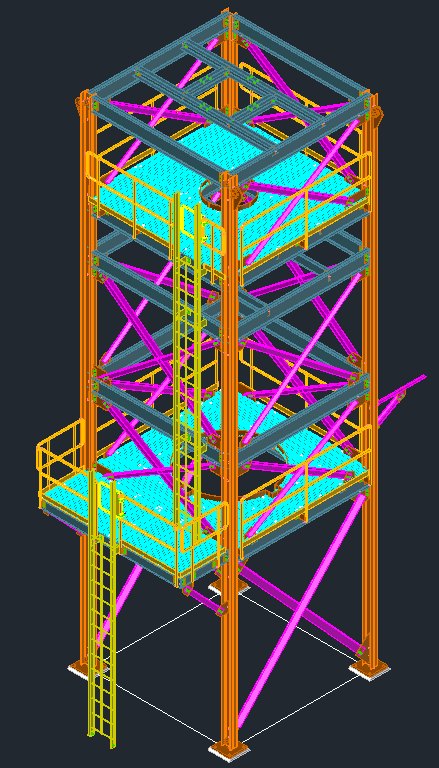
| Step 2: Digital Mapping | 3D CAD models map heat numbers directly to cut parts. | Automated compliance matching |
| Step 3: Weld Logging | Tracks certified welders, joint parameters, and NDT logs. | Continuous quality chain of custody |
The Plain Business Consequence
If you cannot produce the 3.1 certificates tracing physical members, or pressure-vessel shell plate, back to the furnace, your structural or pressure calculations are legally void.
This is where multi-disciplinary experience matters. Having logged over 90,000 engineering hours across 550+ storage assets (including 400+ API 650/620 units) and 100+ pressure vessels (separators, reactors, skids and heat exchangers), Acufore has internalized shop-floor bottlenecks and material compliance loops across every equipment category. We manage the supply chain end-to-end from the initial BIM model straight through our audited fabrication partners, guaranteeing an airtight paper trail.
03Eurocodes vs. UK National Annexes
For structural work, engineers draw up calculations using standard Eurocodes (BS EN 1993). However, generic offshore designers frequently fail to apply the UK National Annex.
The UK National Annex modifies standard European formulas to account for the UK's specific environmental risks, including localized wind mapping, coastal corrosion, and heavy snow loads.
The Plain Business Consequence
If your structure is designed using generic international wind load math, the physical support columns or pipe racks may be engineered too thin for British weather. It will fail a local third-party structural review and expose your facility to severe safety liabilities.
Having engineered 120+ fuel and logistics units (complying with strict ULC-S601 standards), our teams calculate every structural framework to exact regional environmental codes before a single shop drawing is approved.
04Pressure Vessels, Storage Tanks & Process Skids
Structural steel is only one category of plant equipment moving through the UK-India corridor. Pressure vessels, storage tanks, and fully skidded process units follow the same CETA logic, genuine transformation, verified material, and destination-market certification, but the certification pathway itself is different.
Pressure-retaining equipment sold into the UK falls under the UK Pressure Equipment (Safety) Regulations 2016 (the retained equivalent of the EU Pressure Equipment Directive, PED). Depending on the pressure/volume category, that can require a UK Approved Body to be involved in conformity assessment before a UKCA mark can be applied, alongside design-code compliance to ASME Section VIII, EN 13445, or the relevant storage tank code (API 650/620).
The Plain Business Consequence
- Higher-category vessels need third-party sign-off: Above certain pressure/volume thresholds, self-certification isn't an option, an Approved Body must review the design and witness testing before the equipment can carry a valid mark.
- Hydrotest and NDT records are your origin evidence too: Just as weld logs and heat-number mapping prove origin for structural steel, hydrostatic test certificates, radiography reports, and code-stamp documentation are what demonstrate genuine transformation for a vessel or skid under CETA's Rules of Origin.
- Skids compound the risk: A process skid packages structural steel, pressure equipment, piping, and sometimes instrumentation into one shipment. Each sub-system needs its own compliant paper trail, and a single missing certificate can hold up the entire unit at the border or on site.
Because we run structural, mechanical, and pressure-equipment design under one BIM model with one fabrication network, a skid leaving our shop carries a single, reconciled compliance package, rather than three separate vendors' worth of certificates that may not line up.
Turnkey deliveryHow Acufore Bridges the Gap: De-Risked Turnkey Delivery
For us at Acufore, we treat regulatory compliance as a design requirement, whichever category the equipment falls into. With more than 1,400 industrial projects behind us, we've already solved the fabrication bottlenecks and site-fit issues that trip up standard offshore vendors.
Acufore acts as a single point of accountability across all three core engineering disciplines:
Certified Structural & Pressure Equipment Design
Our design team calculates steel frameworks to Eurocodes with UK National Annexes, and pressure equipment to PED/ASME requirements, ensuring drawings pass local UK audits on the first submission.
Plant BIM & Mechanical Optimization
Drawing on extensive pressure vessel (ASME) and process equipment experience, we build data-rich 3D BIM models where piping, structural, and mechanical layouts are clash-tested and FEA-stress-analyzed before fabrication begins.
Traceable Material Sourcing
We source raw steel and pressure-vessel plate exclusively from audited mills that supply fully verified BS EN 10204 3.1 certificates, mapping these heat numbers directly into our digital 3D models.
UKCA-Ready Fabrication
We partner with fully audited manufacturing hubs in India, BS EN 1090-certified for steelwork and PED/ASME-capable for pressure equipment, to ensure every cut, weld, and non-destructive test (NDT) meets the standard the equipment category requires.
Frictionless Trade Documentation
Because we control both design and physical fabrication across every equipment category, we align the entire Bill of Materials (BOM) with CETA's Rules of Origin, providing your customs broker with an indisputable paper trail for preferential entry.
You get the cost benefits of the UK-India trade corridor, backed by a de-risked, site-ready turnkey partner who has 100% client retention.